
- All
- Product Name
- Product Keyword
- Product Model
- Product Summary
- Product Description
- Multi Field Search
Views: 0 Author: Site Editor Publish Time: 2025-09-24 Origin: Site

A gas hob is one of the most essential appliances in modern kitchens, prized for its precision, speed, and versatility. While many homeowners focus on its performance in daily cooking, few stop to consider the intricate journey that brings a gas hob from the factory floor to their kitchen countertop. Understanding the production process offers insight into the engineering, quality control, and innovation that ensure each unit performs safely and efficiently.
This article explores the complete lifecycle of a gas hob, from raw material selection and component fabrication to assembly, testing, packaging, and distribution. By delving into this process, homeowners, culinary enthusiasts, and industry observers can appreciate the careful planning and technical expertise behind a reliable kitchen appliance.
The production of a gas hob begins with careful selection of raw materials, which determines both durability and safety. Components such as stainless steel, cast iron, tempered glass, brass, and aluminum are commonly used in hobs.
Stainless steel is popular for hob surfaces due to its resistance to corrosion, heat, and stains. Cast iron is used for burner grates because of its strength and ability to distribute heat evenly. Tempered glass offers a sleek, modern aesthetic while remaining strong enough to withstand daily use. Brass and aluminum are often used in burner components and gas fittings, providing durability and precise gas flow control.
Manufacturers source high-quality materials to ensure that every hob can endure the heat, pressure, and mechanical stress typical of daily kitchen use. Material testing is also performed to ensure compliance with safety and performance standards.
Once the materials are selected, the fabrication of individual components begins. Each part of a gas hob—from burner heads and gas valves to grates and control knobs—is precisely engineered.
Burners are typically made by molding brass or aluminum and drilling precise gas outlets to ensure even flame distribution. Burner caps, often made of stainless steel, are shaped to optimize heat transfer and flame stability. Grates are cast from durable iron and finished to provide strength while resisting rust and heat deformation.
Control mechanisms, including knobs and gas valves, are assembled to allow smooth operation and precise flame adjustments. In modern hobs, digital ignition components and flame failure devices may also be integrated at this stage. Each component is manufactured to tight tolerances, ensuring proper fit and functionality in the final assembly.
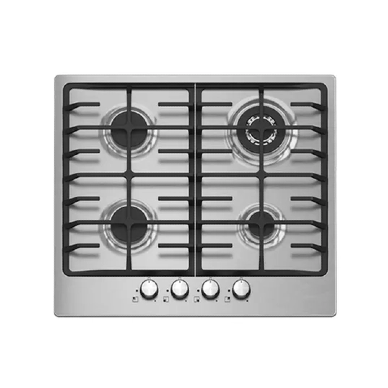
The surface of the gas hob plays both a functional and aesthetic role. Stainless steel surfaces are polished to a smooth, scratch-resistant finish, while tempered glass surfaces are coated and treated for heat resistance and ease of cleaning.
Finishing processes may include powder coating, electroplating, or heat treatment to enhance durability. Burners and grates undergo finishing treatments to prevent rust and ensure longevity. By paying attention to surface quality, manufacturers produce hobs that are not only functional but also visually appealing for modern kitchens.
The assembly of a gas hob involves integrating all components into a fully functional unit. Skilled technicians carefully fit burners, caps, grates, gas valves, ignition systems, and safety devices into the hob frame.
During assembly, attention is paid to alignment, spacing, and stability. Burner placement ensures even heat distribution, while control knobs are positioned for ease of use and safety. In modern hobs, electronic ignition and flame failure devices are installed and calibrated to meet safety standards.
Automated and manual assembly lines are often combined in large factories. Automation ensures consistency in repetitive tasks, while manual oversight guarantees precision in intricate operations. Each hob undergoes multiple checks during assembly to prevent defects and maintain quality.
After assembly, the gas hob undergoes rigorous quality control and testing. Safety, performance, and reliability are the primary focus areas.
Flame tests verify that each burner ignites correctly and produces a stable, even flame. Gas leakage tests ensure that connections are secure and that no harmful gas escapes during operation. Control knobs are tested for smooth operation and precise flame adjustment. Electronic components, including ignition systems and flame failure devices, are checked for responsiveness and safety compliance.
Additionally, hobs may undergo durability tests, such as repeated ignition cycles and heat exposure, to simulate years of household use. Only units that meet stringent standards proceed to packaging and distribution. This rigorous testing ensures that every gas hob reaching a kitchen is safe, reliable, and ready for long-term use.
Once testing is complete, the gas hob enters the packaging stage. Packaging is designed to protect the appliance during transit, preventing scratches, dents, or damage to sensitive components. Hobs are typically placed in molded foam or cardboard inserts, then secured in sturdy outer boxes.
Clear instructions, warranty information, and safety manuals are included to guide homeowners in installation, use, and maintenance. Packaging also often includes protective films or covers for glass surfaces to maintain a pristine appearance.
Logistics planning ensures that hobs are transported efficiently and safely from the factory to warehouses, distributors, and ultimately, retail stores or direct to customers’ homes. Proper handling during this phase is critical to maintaining product integrity.
The journey of a gas hob concludes with installation in the kitchen, where proper setup ensures safe and optimal performance. Certified technicians or trained installers connect the hob to the gas supply, secure it to the countertop, and test all functions.
Ventilation is checked to ensure safe operation, and users are instructed on proper use, cleaning, and safety practices. Homeowners can then enjoy the full benefits of their gas hob, including precise temperature control, rapid heating, and versatile cooking capabilities.
Modern gas hob production incorporates innovations that enhance safety, efficiency, and design. Electronic ignition systems replace traditional manual methods, reducing the risk of gas leaks during lighting. Flame failure devices automatically shut off the gas supply if the flame goes out unexpectedly.
Energy-efficient burner designs allow faster boiling and even cooking while minimizing gas consumption. Sleek surfaces made of tempered glass or stainless steel provide modern aesthetics and simplify cleaning. Some hobs now integrate digital controls or smart features, offering precise heat management and even remote monitoring in connected kitchens.
These advancements reflect the continuous evolution of gas hob manufacturing, ensuring that modern appliances meet the demands of contemporary households.
Gas hob manufacturers adhere to strict environmental and safety standards during production. Materials are selected to reduce environmental impact, and processes are designed to minimize waste and emissions. Safety regulations guide the design of burners, valves, and electronic components to protect users from fire hazards, gas leaks, and malfunction risks.
Compliance with international certifications ensures that hobs are suitable for various markets and meet rigorous safety and quality benchmarks. By maintaining these standards, manufacturers provide appliances that are both safe for the home and responsible in terms of environmental impact.
Understanding the production process of a gas hob allows consumers to appreciate the engineering, testing, and quality control that go into each unit. From raw materials and component fabrication to assembly, testing, and installation, every stage is carefully managed to ensure safety, durability, and performance.
This knowledge also helps homeowners make informed choices when purchasing appliances. Awareness of material quality, safety features, and production standards can guide buyers toward reliable, long-lasting gas hobs that perform efficiently in daily cooking.
The journey of a gas hob from factory to kitchen is a complex process involving careful material selection, precise component fabrication, meticulous assembly, rigorous testing, and thoughtful packaging. Each step ensures that the final appliance is safe, durable, efficient, and visually appealing for modern kitchens.
By understanding this process, homeowners can appreciate the craftsmanship and engineering behind a reliable gas hob. A well-produced hob provides years of safe and efficient cooking, combining speed, precision, and versatility to meet the demands of contemporary culinary life. For those seeking high-quality gas hobs that deliver performance, safety, and modern design, Zhongshan Jiaye Electric Appliance Technology Co., Ltd. offers a range of products designed to bring reliable, professional-level cooking to every home kitchen.


