- All
- Product Name
- Product Keyword
- Product Model
- Product Summary
- Product Description
- Multi Field Search
Views: 0 Author: Site Editor Publish Time: 2026-07-13 Origin: Site

Kitchen design has steadily shifted away from bulky freestanding appliances. Modern homeowners now favor sleek, integrated architectural layouts. However, appliance terminology often causes unnecessary confusion during renovations. You might hear terms like "hob," "stove," and "cooktop" used interchangeably in stores. Evaluating kitchen upgrades requires clear definitions and technical understanding. Buyers must understand exactly what a Gas Hob entails before committing to a purchase. You need to assess mechanical reliability alongside installation prerequisites. Strict safety compliance is also non-negotiable for indoor gas appliances.
This guide breaks down the technical mechanics of these cooking surfaces. We will contrast them directly against traditional freestanding units. Furthermore, we provide a strict evaluation framework for your upcoming renovation. You can use this logic to shortlist the right appliance for your specific kitchen architecture. A well-chosen unit enhances daily culinary tasks while maintaining rigorous safety standards in your home. Let us explore how these units integrate seamlessly into modern countertops.
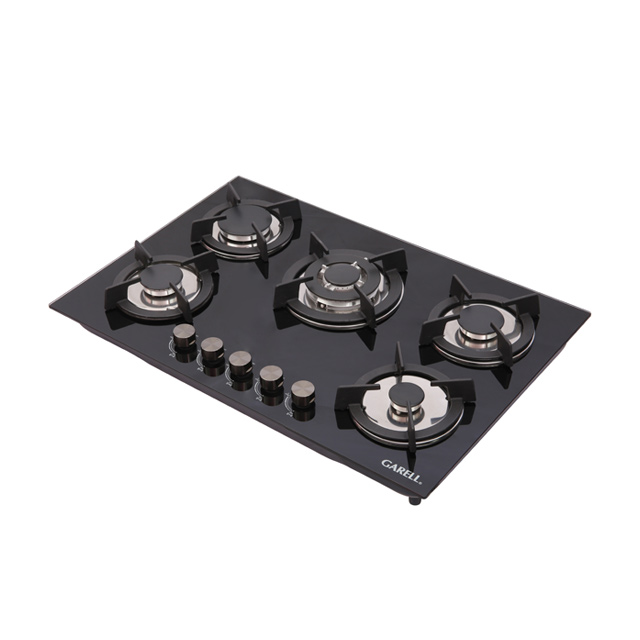
A gas hob is a dedicated cooking surface designed to be integrated directly into a kitchen countertop, functioning independently of an oven.
The primary mechanical advantage lies in analog, immediate heat control via mechanical valves, gas regulators, and electronic ignition systems.
Evaluating a built-in gas hob requires assessing material durability (tempered glass vs. stainless steel), burner configuration, and necessary safety features like Flame Failure Devices (FFD).
Implementation carries strict prerequisites: certified gas line installation, specific countertop cut-out dimensions, and mandatory ventilation compliance.
The term "hob" serves as the standard British and European designation for a cooktop. It refers specifically to a drop-in cooking appliance. Installers mount this unit directly into a pre-cut hole in your kitchen counter. It operates entirely independently from your oven. This separation defines the modern built-in kitchen aesthetic.
You must understand how this appliance differs from a traditional freestanding gas stove. Stoves represent all-in-one units. They combine a cooktop and an oven into a single large box. Stoves rest directly on the floor. Conversely, hobs are seamless countertop integrations. They require surrounding cabinetry for structural support.
This structural difference unlocks significant spatial and aesthetic advantages. Hobs allow for highly modular kitchen layouts. For example, you can place the cooking surface on a central island. You can then install the oven in a separate wall cabinet at eye level. This separation vastly improves kitchen ergonomics.
Built-in units also solve a major cleaning frustration. They sit perfectly flush or slightly raised on the counter surface. This tight integration prevents food scraps and grease spills from falling into dark gaps. Freestanding stoves notoriously suffer from dirty crevices between the appliance and adjacent cabinets.
Feature | Built-In Gas Hob | Freestanding Gas Stove |
|---|---|---|
Placement | Dropped into a custom countertop cut-out. | Rests directly on the kitchen floor. |
Oven Integration | Completely independent from the oven. | Combined cooktop and oven in one unit. |
Layout Flexibility | High. Can be placed anywhere with gas routing. | Low. Requires a dedicated floor gap. |
Cleaning Profile | Seamless edges prevent trapped food spills. | Prone to side-gap grease buildup. |
Understanding the mechanical operation of your appliance ensures safe daily usage. The journey begins at the gas supply and regulation stage. Natural gas or liquid petroleum gas (LPG) travels from your main line. It passes through a pressure regulator located before the appliance. This regulator ensures a safe, consistent pressure level. The gas then enters the internal manifold pipe hidden beneath the surface.
The control valve system acts as the gatekeeper. When you push and turn a physical knob, you open a mechanical valve. This action regulates the precise flow of gas to an individual burner. This mechanical linkage provides immediate, visual heat control. Cooks highly value this analog feedback. You can see the flame adjust instantly as you turn the dial.
The ignition sequence involves rapid mechanical and chemical coordination. Modern appliances utilize continuous spark ignition systems. Follow this specific sequence of events:
Valve Activation: You depress the control knob, opening the gas pathway.
Electronic Spark: The depression triggers a piezoelectric or electronic module. This sends high voltage to an igniter pin, creating continuous sparks.
Oxygen Mixing: Gas rushes through a small internal venturi tube. It mixes perfectly with ambient oxygen here before reaching the burner cap.
Combustion: The aerated gas mixture hits the spark at the burner cap, igniting into a controlled blue flame.
Safety remains paramount in modern gas appliance design. The Flame Failure Device (FFD) serves as a critical safety mechanism. It relies entirely on a small metal probe called a thermocouple. The thermocouple sits directly in the burner's flame. The heat generates a tiny electrical current holding the gas valve open.
If a sudden draft blows the flame out, the thermocouple cools down immediately. The electrical current stops within seconds. This drop triggers an automatic shut-off valve. The system strictly prevents unlit gas from leaking silently into your kitchen environment. This mechanism prevents catastrophic domestic gas buildup.
Choosing the correct built-in gas hob requires careful evaluation of your cooking habits. Burner configuration and total heat output dictate performance. Manufacturers measure heat output in British Thermal Units (BTU) or Kilowatts (kW). You must match the burner types to your specific culinary needs.
Standard configurations feature a mix of heating capacities. Wok burners provide intense high heat (often exceeding 4.0 kW). They boil water quickly and handle heavy searing. Simmer burners output very low heat (around 1.0 kW). They offer delicate control for melting chocolate or gently reducing sauces. Evaluate your daily meal prep to determine the ideal burner ratio.
Surface material realities dramatically affect maintenance routines and kitchen aesthetics. Buyers must weigh durability against visual appeal. Consider these common surface options:
Stainless Steel: Offers extreme durability and a classic industrial look. It withstands heavy impact without shattering. However, it is prone to micro-scratching if you clean it with abrasive sponges. Fingerprints also show up prominently.
Tempered Glass: Delivers a highly modern, sleek aesthetic. The perfectly flat surface makes wiping down grease exceptionally easy. It requires specialized glass cleaners to prevent streaks. It carries a minor risk of shattering under extreme, blunt impact from heavy dropped pots.
You must also evaluate the grate materials supporting your cookware. Grates bridge the gap between the flame and the pot. Cast iron grates represent the premium standard. They are exceptionally heavy and highly stable. Cast iron retains heat brilliantly, though its porous nature requires occasional seasoning. Enamel grates offer a cheaper alternative. They are much lighter and easier to wash in a sink. Unfortunately, enamel chips over time and degrades under constant high heat.
Installing a gas appliance involves rigorous pre-installation checks. You cannot simply drop the unit into a counter and cook. First, confirm your existing gas supply line compatibility. Appliances usually ship calibrated for natural gas. If your home uses bottled LPG, you must install specific conversion kits. These kits replace the tiny injector nozzles inside each burner to handle different gas pressures.
Electrical requirements often surprise new buyers. While the fuel is gas, the ignition system requires electricity. Most modern units require a standard 13-amp or 15-amp electrical socket positioned below the counter. Without this connection, you would have to manually light the burners with a match.
Countertop modification presents significant physical risks during renovation. The appliance requires a very specific cut-out dimension. Incorrect measurements can ruin expensive stone counters. Professional templating is strictly necessary for quartz, granite, or solid wood countertops. Even a five-millimeter error can prevent the appliance from seating securely.
Ventilation and vertical clearances follow strict local building codes. You must maintain mandatory minimum clearances between the cooking surface and combustible materials above. Typically, building codes require at least 650mm to 750mm of clearance to the extractor hood. Your kitchen must also feature adequate makeup air and compliant extraction rates to remove carbon monoxide.
Certified installation is an absolute legal and practical necessity. DIY gas fitting creates a massive domestic liability. You must hire a registered, certified gas engineer for the installation. Proper certification validates the manufacturer's warranty. More importantly, it ensures your home insurance remains fully compliant and active. A certified technician will pressure-test the system for micro-leaks before signing off.
Deciding on a gas-powered surface requires analyzing your personal culinary workflow. You should choose this appliance if you value visual, immediate temperature control. Chefs love seeing the flame size directly correspond to the heat output. It offers an intuitive cooking experience.
Gas also remains the superior choice for specific cookware. If you frequently use round-bottom woks, gas flames curve naturally around the pan. Flat electric surfaces cannot heat traditional woks properly. Furthermore, if you live in an area with frequent power outages, gas provides resilience. You can manually light the burners with a match during blackouts, ensuring you can still prepare hot meals.
However, you should consider alternatives like induction under certain circumstances. Consider induction if you prioritize maximum energy efficiency. Gas loses ambient heat to the air, while induction heats the pan directly. Induction also provides a perfectly flat, cold glass surface for effortless cleaning. Lastly, induction is necessary if your kitchen layout lacks access to a dedicated gas routing line.
If gas remains your preference, follow specific next steps. First, measure your existing countertop cut-outs carefully if replacing an old unit. Second, physically check the gas line routing under your cabinets. Finally, finalize your required burner count before browsing specific brand catalogs. Preparing these details prevents expensive installation delays.
A gas hob functions as far more than a simple cooking surface. It represents a fixed architectural element within a modern kitchen ecosystem. Transitioning to this built-in style drastically improves spatial flow and ergonomic comfort. The mechanical simplicity of valves and continuous ignition provides highly reliable daily performance.
Successful adoption relies equally on selecting the right configuration and respecting structural limitations. You must choose surface materials and grate types that match your tolerance for daily cleaning. Furthermore, strict adherence to safety compliance prevents severe domestic hazards.
Take action by measuring your available counter space today. Consult with a certified kitchen installer regarding your ventilation and gas line capabilities. Once you verify your infrastructure, browse a catalog of compliance-tested models to find the perfect match for your culinary needs.
A: Yes, they require electricity to power the electronic ignition system and safety sensors. They usually plug into a standard socket under the counter. However, if you experience a power cut, you can manually light the gas burners using a match or a lighter.
A: There is no functional difference; the distinction is purely regional terminology. "Hob" is the standard term used in the UK, Europe, and parts of Asia. "Cooktop" is the standard term utilized in North America. Both refer to a built-in cooking surface without an attached oven.
A: Most modern units support LPG conversion. The process requires swapping out the tiny injector nozzles inside each burner to accommodate the different pressure of bottled gas. This conversion is highly technical and must strictly be performed by a certified gas technician.
A: Always ensure the surface is completely cool before cleaning. Remove the heavy cast iron grates and wash them separately in the sink. Use soft, non-abrasive cleaners and microfiber cloths to avoid scratching stainless steel or glass surfaces. Periodically check the small burner ports and clear any food blockages with a pin.