- All
- Product Name
- Product Keyword
- Product Model
- Product Summary
- Product Description
- Multi Field Search
Views: 0 Author: Site Editor Publish Time: 2026-07-16 Origin: Site

Cooking is a delightful art. It often leaves behind an invisible and stubborn mess. Many people view a ventilation system as merely a decorative metal canopy. They treat it as an aesthetic afterthought placed above the stove. In reality, it acts as a highly essential, active mechanical ventilation system for your home.
Modern cooking generates intense heat and vaporized airborne grease. It also produces heavy moisture and potentially harmful volatile organic compounds (VOCs). Without an active extraction system, these dangerous byproducts ruin your indoor air quality. They also coat your clean living spaces in a persistent, sticky grime over time.
Choosing the right kitchen range hood requires careful and informed thought. You must successfully balance extraction power against installation complexity. You also need to respect your personal noise tolerance limits. We will explore how these powerful systems protect your health. We will evaluate different venting architectures. Finally, we will guide you through matching the ideal machine to your specific layout.
A range hood’s primary function is to capture, filter, and exhaust contaminated air to protect indoor air quality and kitchen infrastructure.
The fundamental decision relies on routing: ducted (exterior venting) provides absolute extraction, while ductless (recirculating) relies on filtration.
Performance is objectively measured by airflow capacity (CFM), noise level (Sones), and physical capture area.
High-performance units often trigger secondary building code requirements, such as make-up air systems.
Homeowners often ask why they truly need an overhead extractor. The answer lies in protecting both human health and delicate home infrastructure. High-heat cooking drastically alters the air composition inside your home. We must examine the primary utilities driving this mechanical requirement.
Airborne Particulate and Grease Mitigation: Searing meat creates heavy, vaporized grease. Centrifugal blowers pull this contaminated air upward quickly. Baffle or mesh filters then aggressively trap the oil droplets. This critical process prevents sticky residue from settling permanently on your cabinetry, ceilings, and soft upholstery.
Indoor Air Quality (IAQ) Management: Gas stoves consistently produce nitrogen dioxide (NO2) and carbon monoxide (CO). High-heat frying generates dangerous fine particulate matter (PM2.5). Active mechanical extraction removes these harmful pollutants directly from your breathing zone. This protects your respiratory health during daily meal preparation.
Thermal and Moisture Control: Boiling liquids release massive volumes of heavy steam. Latent heat and trapped moisture severely damage drywall over time. They cause expensive wood cabinet finishes to peel and warp. Removing this damp air immediately prevents structural degradation and stops hidden mold growth.
Odor Abatement: Pungent food smells tend to linger for days. They embed themselves into carpets and fabrics. Rapid air exchange eliminates these smells quickly. This provides a massive secondary benefit, especially for modern open-concept living spaces.
You face one fundamental decision during your kitchen planning phase. You must choose between ducted and ductless routing. This critical choice dictates absolute extraction performance.
Ducted (Vented) Systems
Ducted systems pull dirty air straight from the cooking zone. They physically remove this air from the building envelope via dedicated exterior ductwork. This provides maximum efficacy for your home. It totally eliminates heat, moisture, smoke, and odors. However, you face notable architectural trade-offs. You must make structural modifications to your walls or ceilings. Your appliance placement remains strictly fixed based on existing joist and stud routing paths.
Ductless (Recirculating) Systems
Sometimes you cannot drill directly through your exterior walls. Ductless systems offer a functional alternative. They pull air through a primary metal grease filter first. Next, the air passes through a secondary active carbon or charcoal filter. The machine then returns this scrubbed air back into your room. This makes them highly viable for multi-family housing or rigid condo layouts. However, clear trade-offs exist here as well. Recirculating systems simply do not remove heat or moisture. You must also follow strict maintenance schedules. You have to replace the charcoal filters frequently to maintain efficiency. This leads to higher long-term operating demands.
Feature | Ducted (Vented) | Ductless (Recirculating) |
|---|---|---|
Core Mechanism | Expels air completely outside the home | Filters and returns air into the kitchen |
Heat & Moisture Removal | Excellent (100% removal) | None (Remains in the room) |
Installation Complexity | High (Requires structural ductwork) | Low (Plug and play or simple hardwire) |
Maintenance Needs | Low (Wash grease filters periodically) | High (Must buy and replace carbon filters) |
How do you measure extraction performance objectively? You cannot rely purely on beautiful aesthetics. You need hard, standardized metrics to guide your final purchase decision. Evaluating these criteria ensures your system performs efficiently under heavy loads.
CFM (Cubic Feet per Minute) to BTU Ratios: CFM represents the baseline calculation for sizing an internal motor. Industry math provides a simple rule for gas ranges. You need 100 CFM for every 10,000 BTUs of total gas cooktop output. For electric ranges, you generally calculate 10 CFM per linear inch of the cooking surface.
Acoustic Ratings (Sones): Noise levels strongly dictate user adoption. A highly rated CFM fan proves useless if it sounds uncomfortably loud. One Sone equals the hum of a quiet refrigerator. Normal conversations happen around four Sones. You must evaluate the Sone rating at standard, everyday operating speeds, not just at the maximum boost level.
Physical Capture Area (Coverage): Your extractor must physically extend beyond the primary cooking surface. Rising heat naturally expands outward into a wider plume. We strongly recommend choosing a unit at least as wide as the range itself. Ideally, it should overlap by three inches on each side. This guarantees optimal smoke capture before the plume escapes into the room.
Filter Topography: You generally choose between two filter styles. Baffle filters represent commercial-grade efficiency. They force air to change direction rapidly, separating heavy grease droplets. They are highly airflow efficient and completely dishwasher safe. Mesh filters represent entry-level topography. They cause higher airflow restriction and demand frequent, aggressive degreasing to prevent dangerous clogs.
Buying a high-power Range Hood introduces specific installation challenges. You must mitigate these physical risks early to ensure safe operation. Proper planning saves you from expensive remodeling mistakes.
Make-Up Air Legislation
You must understand your local building codes thoroughly. The International Residential Code (IRC) regulates powerful exhaust fans in modern, airtight homes. If your chosen unit exceeds 400 CFM, regulations usually mandate an automatic make-up air damper. Powerful fans create negative pressure indoors. This negative pressure can dangerously backdraft harmful exhaust gases from your water heater or furnace directly into your living space. The damper automatically opens to let fresh outside air replace the exhausted air.
Duct Run Complexity
The physical path your air takes matters immensely. Factory-rated CFM drops significantly when air meets resistance. Sharp 90-degree elbows, long runs, and corrugated flexible piping destroy airflow efficiency. Flexible ducts trap grease in their ridges and create loud air turbulence. You must use rigid, smooth-bore galvanized steel ducting for the entire run. Keep the path as short and straight as possible.
Clearance Thresholds
You must respect the required vertical distance between your active cooking surface and the bottom of the extractor. Installing the unit too low creates a severe fire hazard. Installing it too high allows the smoke plume to escape easily. Adhering to strict clearance guidelines maximizes both physical safety and extraction efficiency.
Cooktop Type | Minimum Clearance | Maximum Clearance | Primary Risk of Incorrect Height |
|---|---|---|---|
Standard Electric / Induction | 24 inches | 30 inches | Plume escapes into the room if too high |
Standard Gas Range | 30 inches | 36 inches | Component melting or fire hazard if too low |
Professional / Commercial Gas | 36 inches | 42 inches | Inefficient grease capture and poor airflow |
Your architectural layout strongly dictates your available form factors. You must select a physical style that complements your space while delivering adequate airflow.
Under-Cabinet Range Hoods
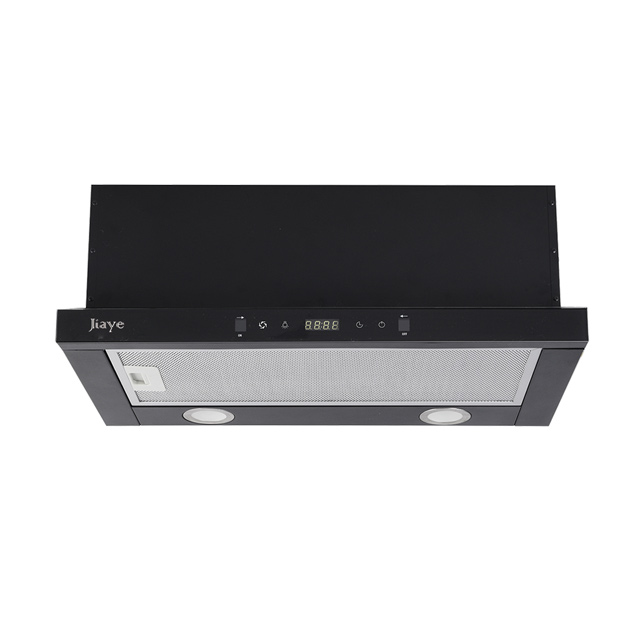
These mount securely underneath your upper wall cabinets. They represent the best choice for replacing existing, outdated setups. They excel in space-constrained layouts. The ductwork usually routes straight back through the wall or up through the cabinet itself. This saves valuable floor space.
Wall-Mount / Chimney Hoods
These represent the absolute standard for open-wall appliance placements. They feature an exposed metal flue pushing upward to the ceiling. They offer a tremendously strong balance between a massive physical capture area and striking visual aesthetics. They work perfectly where no upper cabinets exist.
Island Hoods
Island installations present unique engineering challenges. These units hang freely from the ceiling directly over a central island. They require intense ceiling structural reinforcement to handle their significant weight. They also generally require higher CFM ratings. Island locations suffer greatly from unpredictable cross-drafts in open spaces, which easily blow smoke away from the capture zone.
Insert / Built-in Liners
Inserts work perfectly for custom cabinetry solutions. You hide the mechanical components entirely inside a decorative wooden or metal shroud. This approach requires precise internal volume calculations. You must ensure the custom enclosure safely supports the heat output and accommodates the motor housing securely.
Over-the-Range (OTR) Microwaves
Many builders install OTR units to save space. We must address their severe limitations honestly. OTR microwaves feature weak CFM output and a drastically minimal front-burner capture area. They simply do not reach far enough forward. Steam from your front pots will bypass the fan entirely. They represent a functional compromise for tiny spaces, not a true equivalent to a dedicated exhaust fan.
A kitchen ventilation system stands as a critical infrastructure investment. It directly protects your family's health, ensures appliance longevity, and drastically reduces home maintenance. By actively removing harmful pollutants and vaporized oils, you preserve the pristine condition of your living spaces.
Finalize your cooktop BTU or wattage requirements before doing anything else.
Map out your exact ducting path to determine your airflow restrictions.
Select a physical form factor that perfectly matches your cabinetry layout.
Prioritize larger physical capture areas over artificially inflated motor speeds.
A: Most residential building codes do not universally mandate a dedicated exhaust canopy. However, local municipal ordinances often require mechanical ventilation for kitchens. If you install a high-output gas range, regulations often stipulate strict minimum extraction standards. You must always consult your local building code for specific regional requirements before starting any remodel.
A: Yes, but it acts as a severe compromise. OTR microwaves typically offer much lower CFM ratings. They also feature very minimal front-burner capture coverage. The unit rarely extends far enough over the surface to catch rising steam. Dedicated extractors perform significantly better for heavy cooking and fast odor removal.
A: Yes, they actively trap airborne grease and reduce pungent odors. The dirty air moves forcefully through physical baffles and active charcoal layers. This process significantly improves indoor air quality compared to zero ventilation. However, they cannot remove heat or moisture. They also rely entirely on rigorous filter replacement schedules.
A: You should clean metal mesh or stainless baffle filters every two to four weeks. You can usually place them safely in a dishwasher. If you use a ductless system, you must replace the active charcoal filters every three to six months. Heavy frying demands much more frequent replacement intervals.