
- All
- Product Name
- Product Keyword
- Product Model
- Product Summary
- Product Description
- Multi Field Search
Views: 0 Author: Site Editor Publish Time: 2026-01-29 Origin: Site

Energy efficiency is crucial in modern kitchens. With rising electricity costs, many are looking for ways to reduce energy consumption while maintaining performance. The Induction hob has become a popular choice for those seeking maximum energy savings. Unlike traditional stoves, Induction hobs heat cookware directly, reducing energy loss. In this article, we’ll explore why Induction hobs are the most energy-efficient cooking option today.
Induction hobs operate based on electromagnetic energy, a revolutionary cooking technology. A coil of copper wire beneath the ceramic surface creates an electromagnetic field when powered on. This field induces electrical currents in ferrous cookware, such as cast iron or magnetic stainless steel, causing the pan itself to heat up. This direct transfer of energy allows induction hobs to heat cookware without warming the cooking surface, making them more efficient than traditional methods. In contrast, gas and electric hobs rely on heating elements or flames to transfer heat to the pan, which results in more heat loss and slower cooking times.
One of the key reasons induction hobs are so energy-efficient is their ability to heat cookware directly. Traditional gas stoves and electric hobs generate heat in the burners, which then transfers to the cookware. However, much of this heat escapes into the air or surrounding surfaces. In comparison, induction hobs bypass this process, creating heat directly in the pan itself. This reduces energy loss, as the heat is focused solely on the cookware, and ensures that very little energy is wasted on the surrounding environment.
| Technology Type | Heating Method | Efficiency (%) | Compatible Cookware Types | Key Benefits |
|---|---|---|---|---|
| Induction Hob | Direct heating of cookware | 90% | Magnetic iron, magnetic stainless steel cookware | High efficiency, energy-saving, precise temperature control |
| Electric Hob | Heating element heats surface, then transfers to pan | 75% | Cast iron, stainless steel cookware | Slower heating, lower efficiency |
| Gas Hob | Flame heats cookware | 40% | Cast iron, stainless steel cookware | High heat, significant energy loss |
| Solid Plate Electric Hob | Heating element heats surface | 65% | Cast iron, stainless steel cookware | Less energy loss compared to electric but slower heating |
Induction hobs require specific cookware made from ferrous materials such as cast iron or stainless steel. This is because only magnetic cookware can work with the electromagnetic field generated by the hob. Non-ferrous materials like aluminum or glass will not work unless the pan has a magnetic base. However, most households already own compatible cookware, and if not, induction-compatible pans are widely available. The benefit of using magnetic cookware is that the energy is directly transferred to the pan, maximizing efficiency and reducing the need for excessive heat.
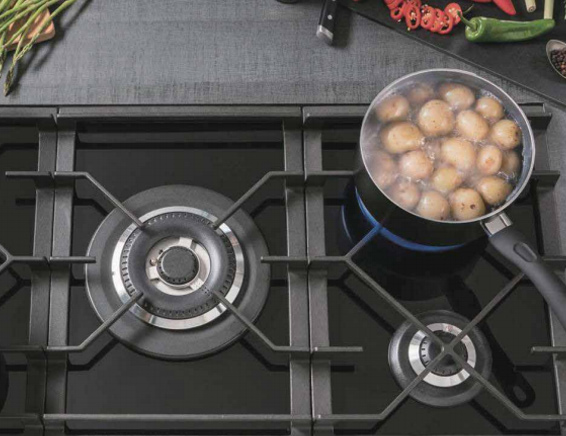
Induction hobs stand out with their impressive energy efficiency, especially in terms of minimizing heat loss. Unlike traditional gas and electric stoves, induction hobs transfer almost all the heat directly to the cookware rather than heating the surrounding air or the cooktop surface. The following table illustrates the heat loss comparison between different cooktop types, showing why induction hobs effectively reduce energy waste.
| Cooktop Type | Heat Loss (%) | Heat Efficiency (%) | Suitable Environment | Energy Efficiency Comparison |
|---|---|---|---|---|
| Induction Hob | 10% | 90% | Suitable for quick, precise cooking | High efficiency, ideal for home and commercial kitchens |
| Electric Hob | 25% | 75% | Suitable for average home kitchens | Lower efficiency, longer cooking times |
| Gas Hob | 60% | 40% | Suitable for high-heat cooking | Significant energy loss, less eco-friendly |
| Solid Plate Electric Hob | 35% | 65% | Small kitchens, budget-friendly households | Slightly higher efficiency than electric, but slower heating |
Tip: Induction hobs not only reduce heat loss but also significantly lower long-term energy costs.
Induction hobs also offer rapid response times, allowing for quick temperature changes that help avoid energy wastage. Traditional electric hobs take longer to heat up and cool down, meaning they consume more energy during this warm-up and cool-down period. In contrast, induction hobs can heat up almost instantly, providing more precise control over the cooking process. The immediate response also means that heat is applied only when needed, further preventing wasted energy. The ability to adjust temperatures with great precision ensures that energy is used exactly when necessary, enhancing overall cooking efficiency.
Most modern induction hobs feature automatic pan detection. This means that when a pot or pan is removed from the cooking surface, the hob immediately stops transferring energy, reducing unnecessary energy consumption. Additionally, many induction hobs have built-in power regulation systems that optimize energy usage when multiple burners are in use. By automatically adjusting the power supply based on the number of active burners, these features help prevent overconsumption, making induction hobs an even more efficient cooking solution.
The energy efficiency of induction hobs far exceeds that of traditional cooking methods. Induction hobs typically operate at an efficiency rate of 85% to 90%, meaning that 85%-90% of the energy consumed goes directly into cooking the food. In comparison, traditional electric stoves operate at an efficiency rate of 70% to 75%, and gas stoves are the least efficient, with an efficiency rating of just 30% to 40%. The high efficiency of induction hobs can result in significant savings on energy bills over time.
When it comes to everyday cooking tasks, the energy savings of induction hobs become even more apparent. For instance, boiling water with an induction hob uses less energy than using a traditional gas or electric stove. In a study comparing energy usage to boil 1 liter of water, induction hobs consumed just 0.1157 kWh, while ceramic hobs consumed 0.1717 kWh, and solid plate hobs used 0.2 kWh. This difference in energy usage means that induction hobs can help reduce long-term electricity consumption and contribute to lower utility bills.
Induction cooking has a direct positive impact on the environment. Since induction hobs rely on electricity, they can be powered by renewable energy sources such as solar or wind power, further reducing their environmental footprint. Gas stoves, on the other hand, emit greenhouse gases, contributing to air pollution and climate change. In fact, replacing a gas stove with an induction hob can result in a significant reduction in carbon emissions. According to some studies, switching to induction can save up to 245 kg of CO2 per year, which is equivalent to the amount absorbed by 13 trees.
Induction hobs offer faster cooking times compared to traditional cooking methods. Since the heat is generated directly in the pan, there is little to no waiting for the hob to warm up. This is particularly beneficial for busy households or commercial kitchens where time efficiency is crucial. Induction hobs can boil water 20%-40% faster than gas or electric stoves, making them ideal for tasks that require quick heat, such as boiling water or frying.The following table provides a detailed comparison of heating times for various cooktops when boiling water.
| Operation | Induction Hob (Minutes) | Electric Hob (Minutes) | Gas Hob (Minutes) | Solid Plate Electric Hob (Minutes) | Suitable Cooking Types |
|---|---|---|---|---|---|
| Boil 1 Liter of Water | 4.88 | 7.39 | 10 | 10 | Quick boiling |
| Stir-fry | 3-5 | 7-8 | 6-7 | 8-9 | High-heat stir-frying |
| Slow Cooking | 30-40 | 50-60 | 60 | 60 | Slow cooking, soups |
Induction hobs are much safer than gas or electric cooktops. Since the surface of the hob does not heat up unless there is a pan on it, the risk of burns or accidental fires is significantly reduced. This is especially beneficial in households with young children or elderly individuals. Additionally, many induction hobs come equipped with safety features like automatic shutoff and pan detection, ensuring that the hob stops working when no pan is present. These features not only make cooking safer but also prevent energy wastage.
Cleaning induction hobs is incredibly easy. Unlike traditional gas stoves, which have burners and grates that can trap food and grease, induction hobs have a smooth, flat surface that is easy to wipe down. Since the hob itself does not heat up, food spills do not bake onto the surface, making it easier to keep the cooking area clean. The lack of exposed burners also makes the hob look more modern and sleek, contributing to a cleaner, more organized kitchen environment.
While induction hobs typically have a higher upfront cost compared to gas or electric stoves, they offer significant long-term savings. Since induction hobs are more energy-efficient, they can help lower electricity bills over time. In fact, studies suggest that using an induction hob can save up to 25% on energy costs compared to traditional cooking methods. The initial investment may be higher, but the energy savings make induction hobs a worthwhile investment in the long run.
In many regions, governments and utility companies offer rebates or tax incentives to encourage consumers to switch to energy-efficient appliances. For example, the U.S. government has been offering rebates for consumers who replace their old gas or electric cooktops with induction models. These programs can help offset the initial cost of purchasing an induction hob and make the switch more affordable. Additionally, as induction technology becomes more widespread, prices continue to fall, making it more accessible to a wider range of consumers.
Induction cooking helps reduce overall carbon emissions by eliminating the need for gas combustion. Unlike gas stoves, which release nitrogen dioxide and carbon monoxide, induction hobs generate no such pollutants, improving indoor air quality and reducing the environmental footprint of cooking. By using electricity from renewable sources, induction cooking supports sustainability efforts and reduces reliance on fossil fuels.The following table compares the carbon footprints of different cooktops, highlighting the environmental benefits of induction cooking.
| Cooktop Type | Annual CO2 Emissions (kg) | Environmental Features | Usage Scenarios | Advantages |
|---|---|---|---|---|
| Induction Hob | 245 | Uses renewable energy, low-carbon | Home and commercial kitchens | Low carbon, energy-efficient |
| Gas Hob | 600 | High CO2 emissions, uses natural gas | High-heat cooking | High heat loss, poor environmental impact |
| Electric Hob | 500 | Can use green electricity, moderate emissions | Home kitchens | Higher CO2 emissions |
| Solid Plate Electric Hob | 530 | Mainly uses electricity, but low efficiency | Small kitchens, budget households | High energy waste, poor eco-friendliness |
Induction hobs optimize energy use by transferring heat directly to the cookware, minimizing energy loss. This is especially important as the global community strives for greater energy efficiency and sustainability. By switching to induction cooking, consumers can contribute to a more energy-efficient world while reducing their own carbon footprint.
The future of cooking lies in energy-efficient technologies like induction hobs. As the demand for sustainable living increases, more households and commercial kitchens are adopting induction cooking to minimize energy consumption. With advancements in renewable energy and energy-efficient appliances, induction hobs represent a step toward a greener, more sustainable future in the kitchen.
Induction hobs are undoubtedly the most energy-efficient cooking option available today. With their minimal heat loss, rapid response times, and precise control, they offer significant energy savings compared to traditional gas and electric stoves. Additionally, induction hobs contribute to a cleaner environment by reducing CO2 emissions and utilizing renewable energy sources. Although the initial investment may be higher, the long-term savings on energy bills and the positive environmental impact make induction hobs a smart and sustainable choice for modern kitchens. Zhongshan Jiaye Electric Appliance Technology Co., Ltd. offers high-quality induction hobs that combine energy efficiency with cutting-edge technology, providing excellent value for consumers looking to optimize both performance and environmental impact.
A: An Induction Hob is a cooking appliance that uses electromagnetic energy to directly heat cookware, making it more energy-efficient than traditional stoves.
A: Induction Hobs use a coil of copper wire to create an electromagnetic field. This field induces currents in ferrous cookware, which directly heats the pan, making it more efficient than gas or electric stoves.
A: Induction Hobs heat cookware directly, minimizing heat loss. This direct transfer of energy ensures higher efficiency, using up to 90% of the energy compared to 40%-60% in gas stoves.
A: Yes, Induction Hobs heat up faster because they directly heat the pan, reducing the time needed to reach cooking temperatures compared to gas or electric stoves.
A: On average, switching to an Induction Hob can reduce your energy usage by up to 25% compared to traditional gas or electric stoves, leading to long-term savings on your energy bills.
A: Induction Hobs are compatible with cookware made from ferrous materials, such as cast iron and magnetic stainless steel. Non-ferrous materials like aluminum won’t work unless the base is magnetic.
A: Yes, Induction Hobs are safer than gas stoves. The cooking surface stays cool, reducing the risk of burns or accidental fires. Many models also feature automatic shutoff and pan detection for added safety.
A: While Induction Hobs use electricity, they are much more energy-efficient than gas stoves. Gas stoves lose much of their heat to the air, while induction transfers energy directly to the pan.
A: Yes, many governments and utility companies offer rebates or incentives for switching to energy-efficient appliances like Induction Hobs, which can help offset the initial purchase cost.
A: Cleaning an Induction Hob is easy due to its smooth, flat surface. Since the hob itself doesn’t heat up, food spills don’t bake onto the surface, making it easier to wipe clean.


