- All
- Product Name
- Product Keyword
- Product Model
- Product Summary
- Product Description
- Multi Field Search
Views: 0 Author: Site Editor Publish Time: 2026-09-14 Origin: Site

Picture this: you have just dropped a beautifully marbled steak into a scorching hot cast-iron skillet. The immediate hiss is deeply satisfying. However, within seconds, a thick, greasy plume of smoke billows upward. It threatens to engulf your entire kitchen. Lingering cooking odors, sticky cabinet surfaces, and compromised indoor air quality are common culinary frustrations. They demand a serious mechanical intervention.
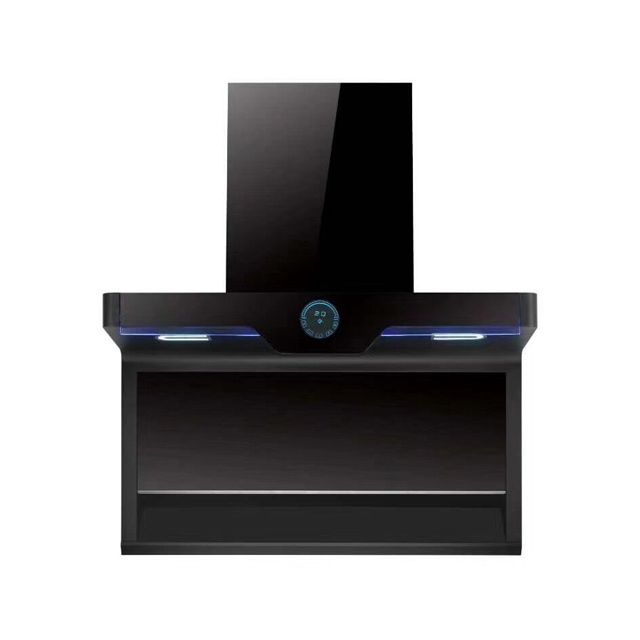
For many homeowners and interior designers, the flat, inverted T-shape canopy has emerged as the ultimate modern solution. It seamlessly blends minimalist architectural aesthetics with heavy-duty extraction capabilities. Yet, a prevalent issue plagues the appliance market. Buyers frequently select a ventilation system based entirely on exterior design. They critically ignore the hidden mechanical trio dictating actual real-world performance: airflow, motor power, and duct size.
Without a comprehensive understanding of how these three variables interact, even the most expensive luxury appliance will severely underperform. This guide breaks down the precise fluid dynamics and technical interactions between these core elements from an engineering perspective. By understanding the physics of kitchen ventilation, you will be equipped to make a data-driven decision. Your next appliance will look stunning while functioning flawlessly.
Airflow Volume determines the exact rate at which smoke, steam, and vaporized grease are extracted from your cooking area.
Motor Power supplies the mechanical driving force. High electrical wattage remains practically useless without proper ventilation pathways.
Duct Size acts as the primary exhaust highway. An undersized pipe severely bottlenecks a high-powered motor, resulting in excessive acoustic turbulence and reduced suction.
Matching the physical dimensions of your appliance to your cooktop is essential. It captures naturally expanding thermal plumes before they escape laterally.
Advanced user interfaces improve daily operational convenience. However, they rely entirely on a solid mechanical foundation to actually remove contaminated air.
Looking at recent market data and ventilation industry trends, there is a clear consumer shift toward high-efficiency indoor air quality management. Open-concept homes dominate modern residential architecture. Consequently, buyers are no longer satisfied with basic, noisy exhaust fans. They demand systems capable of rapid air turnover without acoustic disruption. This architectural shift places a massive premium on the exact science of airflow dynamics. Manufacturers are now forced to prioritize internal aerodynamics, ensuring blower systems and ducting pathways are perfectly matched to prevent cooking odors from permeating adjacent living spaces.
Airflow is the quantifiable volumetric measure of how much air an appliance can physically move within a specific timeframe. In North America, engineers measure this in Cubic Feet per Minute, whereas international standards utilize Cubic Meters per Hour. Think of airflow as the lung capacity of your appliance. An extraction rate of 600 CFM means the unit completely removes and replaces 600 cubic feet of stagnant air every single minute.
Determining the correct airflow requires objective mathematical calculation rather than mere guesswork. Light cooking tasks like boiling or steaming generally require between 300 to 400 CFM. Conversely, heavy culinary techniques demand much more. Deep-frying, wok cooking, or searing meats rapidly generate volatile organic compounds and thick grease vapors. These scenarios require 600 to 900 CFM to effectively manage the thermal load.
Managing this volumetric flow is a structural necessity for preserving your kitchen infrastructure. When extraction is inadequate, vaporized grease molecules cool rapidly. They settle on surrounding cabinetry, walls, and soft furnishings, creating a sticky residue. High-performance models, such as the 900mm Range Hood, are specifically engineered to deliver robust extraction rates. Sufficient volumetric airflow ensures harmful byproducts like carbon monoxide and fine particulate matter are swiftly evacuated.
Motor power, measured in watts, represents the electrical energy consumed by the motor to turn heavy centrifugal fan blades. A prevalent and costly misconception exists in the appliance market. Consumers believe higher wattage automatically equates to superior suction. In reality, wattage only indicates raw energy consumption. Pumping high wattage into an inefficient fan design or restricted ductwork merely generates excess heat and mechanical noise.
The specific type of motor installed significantly impacts performance, longevity, and your monthly energy bill. Traditional Alternating Current motors utilize carbon brushes to conduct electricity. These brushes experience physical friction over time. This leads to gradual wear, heat generation, and an audible mechanical hum. Modern Brushless Direct Current motors represent a massive leap in appliance engineering. Utilizing electronic controllers and electromagnets instead of physical brushes, they operate with near-zero internal friction. They generate incredibly strong static pressure to push heavy air through long ducts, consume significantly less electricity, and boast a longer operational lifespan.
Acoustic comfort is a major factor in modern kitchen design. An underpowered motor attempting to clear heavy smoke inevitably runs at its absolute maximum RPM. This creates a high-pitched, intrusive mechanical whine that disrupts household conversations. In contrast, a powerful, well-engineered motor moves the exact same volume of air effortlessly on a low or medium setting. The result is a whisper-quiet extraction process.
To truly grasp the importance of duct sizing, consider the analogy of a busy highway. The internal motor is the engine of a sports car. The ductwork is the road itself. No matter how powerful the engine is, if a four-lane highway suddenly shrinks to a single lane, traffic grinds to a halt. Exhaust air requires adequate physical space to travel. Upgrading from a standard 6-inch diameter duct to an 8-inch duct nearly doubles the cross-sectional capacity. This allows massive volumes of air to be propelled outward without resistance.
Pairing a high-capacity motor with an undersized duct creates a severe mechanical bottleneck. As the blower forces a large volume of air into a narrow pipe, air velocity increases exponentially. This creates immense static pressure. Extreme resistance causes backdraft, where contaminated air bounces off the pressure wall and spills back into the kitchen. More importantly, this forces the motor to overwork. The inevitable results are thermal overload, premature mechanical failure, and a loud, disruptive whistling noise caused by severe air turbulence.
The material and interior texture of the ductwork are just as critical as the diameter. Contractors frequently use corrugated flexible ducting for ease of installation. However, its ribbed interior is an aerodynamic nightmare. The ridges create thousands of tiny vortexes as air passes over them. This drastically reduces velocity and creates pockets where flammable grease pools. For optimal safety and performance, smooth, rigid galvanized steel or aluminum ducts are strictly recommended to minimize friction loss.
The core principle of effective kitchen ventilation relies heavily on the physics of fluid dynamics. Engineers refer to this as the Golden Triangle. Motor Power generates the driving force, Airflow is the resulting volume of extracted air, and Duct Size is the physical conduit allowing the process to happen. These three variables must be mathematically balanced. If just one element is compromised, system efficiency collapses rapidly.
System Configuration | Airflow Capacity | Duct Specification | Real-World Engineering Result |
|---|---|---|---|
High Power + Undersized Duct | 800+ CFM | 5-inch Flexible | Severe static pressure bottleneck, premature motor burnout, extreme noise, and poor smoke extraction. |
Low Power + Oversized Duct | 300 CFM | 10-inch Rigid | Insufficient air velocity. Hot grease vapor condenses prematurely inside pipes, creating a hidden fire hazard. |
Optimized Synergy | 600 - 900 CFM | 8-inch Rigid | Whisper-quiet operation, maximum thermal plume capture, and extended motor lifespan. |
A fundamental rule of kitchen ventilation design dictates that the overhead capture area must adequately cover the heat source below it. Thermal plumes do not travel in perfectly straight vertical lines. They expand outward at an angle of roughly 10 to 15 degrees. Therefore, the extraction canopy should ideally be up to 6 inches wider than the cooktop to provide a generous overhang.
For standard 30-inch residential cooktops, stepping up to a larger footprint is a highly advantageous engineering choice. The extra width provides crucial overhang on both the left and right sides of the burners. This deliberate size mismatch ensures safety. When you aggressively sear meats on the front burners, the expanding plume is successfully captured by the outer edges of the hood before it drifts into your living space.
The evolution of user interfaces has completely transformed appliance maintenance. Traditional mechanical push-buttons are notorious for accumulating sticky grime within tiny crevices. They become incredibly difficult to sanitize. A modern Touch Range Hood replaces outdated mechanical switches with a seamless, capacitive glass control panel. Because the surface is completely flat and sealed, airborne grease cannot infiltrate the electronics. Cleaning requires nothing more than a single wipe with a damp microfiber cloth.
Infrared and gesture-recognition technologies introduce a brilliant new layer of functional hygiene. Handling raw poultry or kneading sticky dough creates cross-contamination risks. Utilizing a Motion Sensor Range Hood prevents this entirely. By simply waving a hand in front of the optical sensors, the chef can power the unit on, toggle through fan speeds, and control LED lighting without ever leaving a greasy fingerprint on the appliance.
It is important to evaluate these smart features objectively. Touch panels and infrared sensors are strictly user interface components. They do not alter the physical output of the motor or magically increase aerodynamic efficiency. Instead, they send instantaneous digital signals to the motor control board. While they do not increase raw airflow, they significantly enhance the user experience by making it effortless to deploy power precisely when needed.
Even a perfectly engineered ventilation system will fail if its filters are neglected. Heavy-duty stainless steel baffle filters force incoming air to change direction rapidly. This causes heavy grease droplets to condense on the metal. As these baffles accumulate solidified grease, air gaps narrow, creating artificial resistance. A heavily soiled filter acts exactly like an undersized duct by choking the airflow. Routine cleaning in a hot dishwasher is absolutely mandatory to maintain your rated extraction rate.
External environmental factors also compromise your system. The exterior vent cap features a damper flap preventing cold drafts and pests from entering the home. Over time, bird nests, leaves, or grease buildup prevent this damper from opening fully. A restricted vent cap creates immediate, severe back-pressure. Conduct a brief visual inspection annually to ensure the exhaust pathway remains totally unobstructed.
The acoustic profile of your appliance serves as a highly accurate diagnostic tool. A healthy, well-maintained blower produces a consistent, smooth rushing sound of air. Suddenly hearing metallic grinding, sharp rattling, or a high-pitched whine indicates a severe disruption in the Golden Triangle. Rattling often points to an unbalanced impeller wheel. A high-pitched whine usually indicates a sudden restriction in airflow. Identifying these auditory changes early allows for cheap preventative maintenance before catastrophic motor failure occurs.
Purchasing the perfect ventilation system requires looking far beyond a sleek stainless-steel exterior. It demands a careful balancing act of core mechanics. You must find absolute harmony between a capable motor, the correct airflow rating tailored to your cooking habits, and properly sized rigid ductwork. Upgrading your ducting is not a suggestion. It is a strict physical requirement for the system to function efficiently.
Take the time to measure your cooktop carefully before making a final choice. Sizing up provides superior coverage for expanding thermal plumes. While modern touch panels and gesture controls add fantastic daily convenience, they are only as good as the blower system sitting behind them. By prioritizing the synergy of Airflow, Motor Power, and Duct Size, you guarantee a clean, quiet, and consistently odor-free kitchen environment.
Ready to upgrade your kitchen ventilation with professional-grade engineering? Explore the high-performance collection at Jiaye World to find the perfect extraction solution tailored to your exact culinary and architectural needs.
Generally, no. High-capacity units moving over 600 CFM require an 8-inch to 10-inch rigid duct. Attempting to force massive air volumes through a 6-inch pipe severely restricts airflow. This skyrockets static pressure, creates loud air turbulence, and eventually burns out your motor due to thermal overload.
Not at all. Kitchen ventilation engineers highly recommend this specific size mismatch. The extra 3-inch overhang on each side creates a vastly superior capture area. It traps the smoke and grease that naturally billows outward during heavy frying or searing before it escapes into the room.
A standard engineering rule of thumb dictates 1 CFM per 100 BTUs for gas stoves. For instance, a 60,000 BTU gas range requires a minimum of 600 CFM. For electric or induction cooktops, multiply the stove width in inches by 10. Always factor in your specific cooking style. Frequent deep-frying or wok cooking demands higher baseline capacities.
Absolutely. Every foot of straight pipe, and especially every 90-degree elbow, adds friction and static pressure to the system. Keep duct runs as short and straight as physically possible. If your architectural layout requires a long run with multiple bends, you must increase the duct diameter to compensate for the lost air velocity.
Excessive noise is almost always a symptom of a severe ducting restriction rather than a defective motor. If your exhaust duct is too narrow, made of corrugated flexible material, or features too many sharp elbows, the motor works significantly harder to push the air out. This mechanical strain results in loud acoustic turbulence.
They are actually much easier to maintain. Traditional mechanical push buttons feature small gaps where vaporized grease, moisture, and dust easily accumulate. This eventually causes the buttons to stick. A capacitive panel features a completely flat, sealed glass surface. It can be sanitized instantly with a single swipe of a damp cloth.